
Elon Musk Hails Tesla's Optimus as the "Von Neumann Probe": A Self-Replicating Robot Revolution for Space
AUSTIN, Texas – In a late-night X post that has already amassed over 29,000 likes and 6 million views, Tesla CEO Elon Musk dropped a bombshell vision for the future of robotics and space exploration: "Optimus will be the Von Neumann probe."
The declaration, timestamped at 1:24 a.m. GMT on November 30, ties Tesla's ambitious humanoid robot project directly to one of science fiction's most audacious concepts — a self-replicating machine capable of bootstrapping humanity's expansion across the stars. Coming amid Tesla's accelerating AI and autonomy push, Musk's words signal that Optimus isn't just factory labor; it's the vanguard of interstellar colonization.
Optimus will be the Von Neumann probe
— Elon Musk (@elonmusk) November 30, 2025
Decoding the Von Neumann Probe
For the uninitiated, a Von Neumann probe — named after mathematician John von Neumann's 1940s theories on self-replicating automata — envisions a spacecraft that arrives at a distant world, mines local resources, fabricates copies of itself, and dispatches those replicas further into the galaxy. It's exponential growth in action: one probe becomes two, two become four, and so on, potentially colonizing the cosmos in mere millennia.
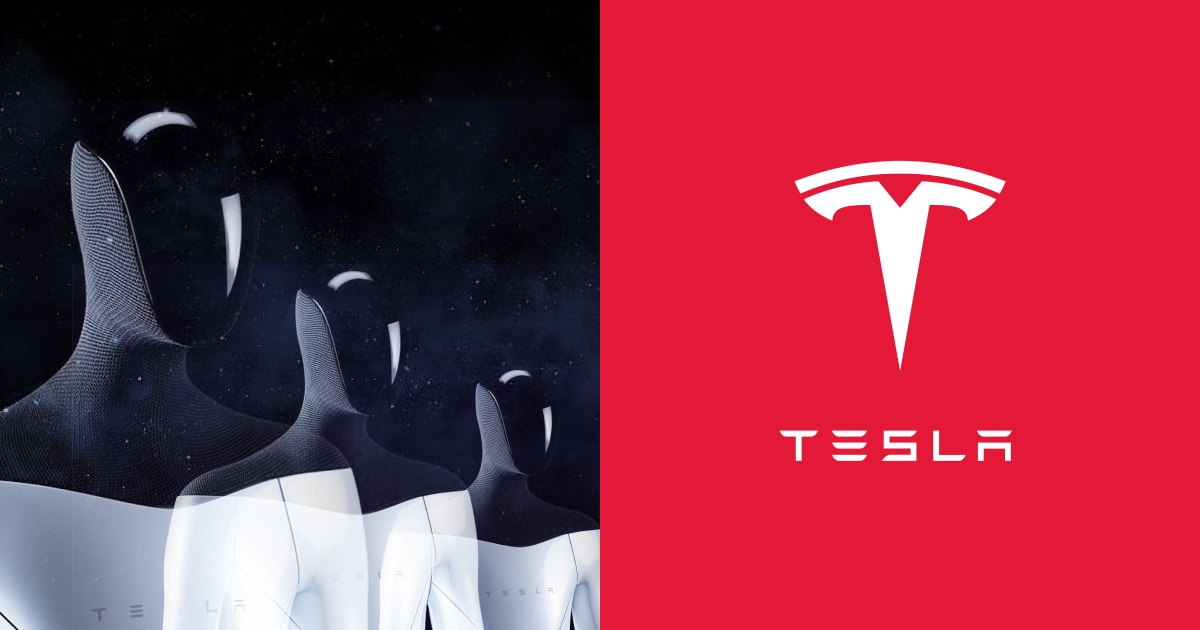
Musk's endorsement positions Optimus, Tesla's bipedal general-purpose robot, as the earthly embodiment of this idea. Unveiled in 2021 and now entering low-volume production at Giga Texas, Optimus stands 5'8" tall, weighs 125 pounds, and boasts human-like dexterity powered by Tesla's Full Self-Driving (FSD) AI stack. Early demos show it folding laundry, sorting blocks, and navigating factories — tasks that pale next to Musk's cosmic ambitions.
In a follow-up reply to user @BigImpactHumans, Musk playfully coined the plural: "Since we are naming the singular, we will also name the plural, so Optimi it is." The quip, garnering nearly 1,000 likes, underscores his signature blend of profundity and whimsy.
Since we are naming the singular, we will also name the plural, so Optimi it is
— Elon Musk (@elonmusk) November 30, 2025
Optimus in Action: From Earth Factories to Martian Frontiers
Musk's post sparked a flurry of replies envisioning Optimus's role in SpaceX's Mars playbook. As @DeepCoherence_ broke it down: Optimus could handle "end-to-end manufacturing, from mining raw materials to assembling components," creating a self-sustaining loop with "minimal human input." On Mars, early Optimi might mine regolith for metals, 3D-print solar panels, and erect Starship launch pads — paving the way for human crews without endless Earth resupplies.
Venture capitalist Steve Jurvetson (@FutureJurvetson) echoed the sentiment, noting that just a decade ago, humanoid robots for Mars seemed far-fetched. Now, "it is so clear that they will get the Sabatier engines generating the fuel for return flights and greenhouses before humans need arrive." This "late binding" approach — Musk's term for keeping plans flexible — exploits Moore's Law to integrate cutting-edge tech like Tesla's Dojo supercomputer for AI training.
The timing couldn't be more poignant. With Tesla's robotaxi fleet doubling in Austin this month and SpaceX's Falcon 9 boosters hitting 30-flight milestones, Optimus represents the convergence of Musk's empires: Tesla's AI brains, SpaceX's heavy lift, and xAI's Grok for on-the-fly problem-solving.
Broader Implications: Kardashev-Scale Ambitions
Musk has long framed Optimus as a multi-trillion-dollar opportunity, potentially outstripping Tesla's automotive revenue. A Von Neumann-capable version could accelerate humanity's climb up the Kardashev scale—harnessing planetary, then stellar, energy resources. Imagine fleets of Optimi swarming asteroids for rare metals or terraforming moons, all while generating data to refine their AI kin back on Earth.
Critics, however, flag risks: unchecked replication evokes sci-fi nightmares like gray goo scenarios, where nanobots consume everything. Musk has dismissed such fears, emphasizing "truth-seeking" safeguards via xAI. Still, the post ignited debates, with users like @Penny2x recommending Dennis E. Taylor's Bobiverse series for a fictional deep dive into probe swarms.
What's Next for Optimus?
Tesla plans to deploy thousands of Optimi in its factories by 2026, using them to build... more Optimi. Musk teased external sales in 2027 at under $30,000 per unit, but space variants could launch sooner via Starship's next integrated flight test.
As @beffjezos quipped in reply: "I just want to supply the brains for you." If Musk's vision holds, those brains — and brawn — could redefine exploration, turning Von Neumann's theory into Tesla's reality.
Optimus isn't just a robot; it's humanity's self-replicating seed for the stars. Share your thoughts with us on X, and don’t forget to follow us for more updates on Elon Musk’s visionary future.